Posts Tagged ‘thriller’
So, I’ll give you the same “spoilers” that I gave my friends in my book club:
This book is really, really, good. Like, might be one of my favorite books that I read this year kind of good.
There is a really cool character named John.
Also, Maps! There is a map in the book! But it’s no good anymore, because the seas have risen just enough to move the shoreline. So where the map says there is a harbor? The harbor doesn’t look like that anymore!
Omg, so much cool stuff in this book!!!
Ok, other very, very minor spoilers ahead.
Have you read A Boy and His Dog at the End of the World? If you leave spoilers in the comments I will delete your comment and then say very mean things about you.
For those you who read this last year, and have been wondering what the hell took me so long, you were right! This book is awesome! I’m sorry it took me so long.
Ready? Let’s go.
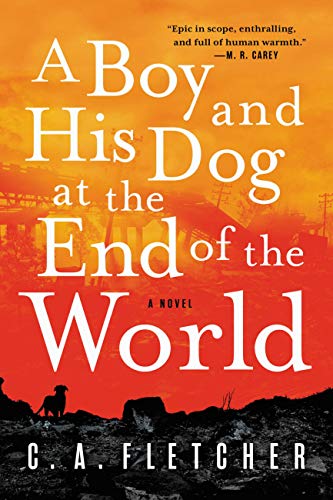
It’s seems to be a year for me to read post apocalyptic stuff? Yeah, I didn’t plan that either. A Boy and His Dog at the End of the World takes place one or two generations after what people called “the gelding”. We don’t know what caused it, within a generation or two, humanity was near extinction. Hardly anyone could have kids. Some people think it was caused by pollution, some people think it was a bio-weapon, some people think it was from something sprayed in the air. (Huh, maybe Mother Nature is an introvert, and she finally had enough of this loud AFparty that she couldn’t ghost?)
A line from the beginning of the book:
In my whole life, I haven’t met enough people to make up two teams for a game of football. The world is that empty
This is a post- apocalyptic world, but the sun is still shining, you can still fish and hunt and do some basic farming, many places are still safe, and although the weather is warmer, it is still bearable. What this is, is a silent world. A world that no longer has a need for humans. All that silence? It was kinda refreshing, actually.
Ration, by Cody T. Luff
Posted on: February 8, 2020
 Ration, by Cody T. Luff
published August 2019
where I got it: purchased new
I bought Cody Luff’s debut novel Ration on a lark. It had been advertised as a horror novel, and I don’t really do horror.
I am however, that person who loves negative space, I look for what’s between the lines, what isn’t said. I like weird, sharp things with edges. I like characters that have no fucks left to give. When you’ve got nothing left to lose, you are at your most dangerous.
Ration is 100% negative space. And it is weird, and it is sharp. And I couldn’t put it down. Everywhere I looked in this book, I wanted to know more about it. The kinds of questions I had, when I finished this book, where the kind of questions all authors want to hear.
I better say this up front: If you are the kind of reader who wants everything explained to you, who wants a lot of exposition and a lot of worldbuilding and backstory, this probably isn’t the book for you. When I say “negative space”, I don’t mean it as a bad thing. This book is packed with atmosphere, and it reads like I’m the person who cornered a starving animal.
Because you should know what you’re getting yourself into.
Ration is post-post-post apocalyptic, As dystopian as it gets. Generations after the calorie companies of The Wind-up Girl, this is generations after The Children of Men. You read a post-apocalyptic book, and you’re like “the world has ended, neat!”, but if there is still an ocean, if there is still grass, if there are still plants and animals to eat, the world still has some life left in it. It is not “over”. Ration takes place after all of that – the ocean is poison, what few plants exist are grown in labs, the population is, well, not. And don’t even get started on animals for food.
There is literally nothing left to lose, what’s left of civilization is at the end of it’s rope. The world of Ration isn’t plan A, or plan B. Plan Z failed decades ago. So here we are, we’ve lost count of how many things we tried, and that all of them have failed so far. Grim? Yes. but this doesn’t read like a grim book, it reads like someone screaming and clawing their way to freedom.
The book opens with a bunch of tween-ish girls living in an old apartment building? An orphanage? An old hotel? Hard to know, and the girls sure don’t know. They just know they’ve been here as long as they can remember. A few mean old ladies run the place. When you’re hungry, you ask the machine in your room for a Ration. Whatever you ask for, it will give it to you. There are only so many calories to go around, so rations will cost you in other ways.
Calories are life. Will you spend them to feed yourself, or to feed someone else? (did you eat meat or eggs today? That cow ate calories. So did that chicken). Will you let someone else die, so you can eat?
Blackout by Connie Willis
Posted on: June 30, 2019
 Blackout by Connie Willis
published in 2010*
where I got it: purchased used
.
.
.
.
I finished reading Connie Willis’s Blackout shortly after blogging about how much of a Lobster this book is. When I wrote that blog post, I was about half way through the book, I am pretty sure I read the 2nd half in a non-stop reading marathon.
That post, and this post has minor plot spoilers for Blackout.
I’m a sucker for time travel thrillers, and I especially love it when the premise of the thriller is “what could possibly go wrong?” and the author has correctly answered that question is “everything!”, thus the thrilling storyline.
Willis’s Doomsday Book is one of my favorite time travel novels, and I’d heard the sequel was To Say Nothing of the Dog. I recently bought a copy of TSNofD, and don’t tell anyone I said this, but i DNF’d that book about 50 pages in. I wasn’t getting any of the Three Men in a Boat jokes (yes, I am a midwestern heathen with no education. More on that in a bit, actually), I wasn’t connecting with any of the characters. So back on the bookshelf that book went. But I still wanted my Connie Willis fix? So I picked up Blackout.
Blackout takes place about 5 years after the events of Doomsday Book, and who were the first two characters I met? Dunworthy and Colin!! This was the sequel to Doomsday Book I’d been looking for!! Colin is nearly college age, and as adorable and puppy-like as always, Badri knows not to let Colin anywhere near the net, and Dunworthy is his usually curmudgeonly and rushing all about self. Dunworthy cares deeply for his time traveling students, he’s just real good at showing it. And he keeps rescheduling everyone’s drops and driving the net techs crazy.
Just joining us for Connie Willis time travel? Here’s some context: It’s the year 2060, time travel exists (but somehow smartphones, e-mail, and pages do not**), and Oxford University sends historians back in time for weeks or months, so the historian can embed themselves in the time and location they are studying. The language and accent you need will be imported into your implant, you’ll receive tons of training on how to act and dress, and when your drop date arrives, you go to the Net with your props, and the net techs send you through. To avoid anyone being able to change history, the net simply won’t open to let you go through to a moment in the past where you’d have any ability to muck things up. To return home, you got to the “drop” site at specific pre-arranged times when the net will open for you. Pretty cool, right?
Minor spoiler: Dunworthy and Colin are not major characters in Blackout. I think I cried with joy to get to see them again, and even 20 pages with them was enough for me to be OK with not seeing them for another who knows how many pages. The novel follows four time travelers/historians who I hadn’t met before, and they have all gone back to different areas of England at different points during World War II. They each have an assignment to observe different places. The good news is that while some things do go wrong, this book is nowhere near as brutal as what all went wrong in The Doomsday Book.
Broken Monsters, Read with a Friend!
Posted on: May 25, 2019
Last month, Book Forager and I read Lauren Beukes’s Broken Monsters. This book came out a while ago, but we both realized it was a book we had been meaning to get to. . . and just needed a nudge to finally read. As we each got through different portions of the books, we’d email back and forth our thoughts and questions for each other. Our conversation morphed in a shared Google Doc for us to chat back and forth about our favorite characters, the weirdness of this book, the ending (holy crap that ending!!), and that a book that is ostensibly about a serial killer made me cry.
Below, is one half of our conversation, head over to Book Forager this weekend to read the other half!

Who were your favorite characters?
Book Forager: I’m torn between Layla, TK and Clayton. Layla is such a badass and I still think she’s the hero of the book. Yes, she’s a teen who’s trying to sort everything out in her head and work out who she is, but she’s got some serious backbone. She takes on VelvetBoy and Travis (which was awesome!), and she seems to understand better than anyone else what’s going on in the factory at the end. She admires Cass without realising just how frigging awesome she is herself.
I loved TK from the moment he found those red shoes and handed them over to Ramón instead of keeping them for himself. Everything about his story breaks my heart. At the end of my copy of the book there was an interview with Beukes (was there in yours, Andrea?) and in both that and her acknowledgements she mentions James Harris from the NOAH project at the Central United Methodist Church in Detroit, who allowed her to use details from his personal history. I’m guessing that’s why TK feels so real. Real or not, he’s loyal and smart, an incredibly sympathetic character, and has an odd super power involving chairs.
And Clayton. He’s just so well written. I have a soft spot for characters who struggle to interact with the world in an acceptable way. He’s incredibly creepy, and deluded, and I’m not sure I can scrape up that much empathy for him, but I still have a little. At least I did at the beginning. I feel like he’s not quite fully formed, if that makes any sense? I’m guessing he may not be on your favourite characters list Andrea, but how did you feel about Clayton Broom?
Andrea: You guessed right, Clayton totally creeped me out! And yes, I 100% get what you mean that he didn’t feel fully formed. Do you think that was on purpose? That he’s looking for something that will make him feel (or literally be) fully formed? I’m such an idiot, I thought my book didn’t have the interview in the back. . . . and I just looked again, just now, and of course it’s there. How did I miss that before??
At first I really liked Jonno, more on him in a bit.
It’s funny, at the beginning of the book, it looks like Gabrielle and Jonno are being presented as the main characters. And yes, they are both important, but I felt like as the book progressed, Layla, and by extension, Cas, become the main characters. It is awful that this thriller about a freaky AF serial killer is really Layla’s coming of age book? She starts as this quiet “don’t look at me” kind of girl who is overshadowed by her boisterous best friend, and the tables kind of turn by the end, in a good way. The crazy shit Layla and Cass do to Velvetboy? Holy crap! And like, I don’t think Layla figures out exactly who she is by the end, but she sure figures out who she isn’t. And wow, what a bonding experience between her and her mom!!!
Layla has a unique way of looking at the world, and I think for teenagers, that unique way is totally normal. But us adults, we’ve forgotten how to look at the world in such a unique way. If she hadn’t been at the warehouse at the end, the book would have had a much more gruesome ending, I think. I wonder if Beukes sort of wrote the lead up to the end backwards? Like, she knew Layla had to be there . . . so how to engineer the scenes before to make sure Layla is there? I bet all authors do something like that, where they know certain characters need to be in certain places for certain things to happen, so how do to you make sure people have a legit reason to be where they are supposed to be at the right time?
Book Forager: Huh … this is going to sound dumb, but it never occurred to me that Clayton’s not-quite-fully-formed-ness was something deliberate. But that makes complete sense (I feel a real wally!) of what happens to him in the woods (even though I think Beukes is deliberately vague on that score, perhaps to keep the reader guessing about the supernatural elements until later on), and why.
Yeah, I felt like Gabrielle and Jonno were going to be the key players too, and I liked the way Layla and Cass slowly moved into the spotlight, how the whole book starts out feeling like a typical procedural and slowly twists into something much more.

Did your favorite character(s) change by the end of the book?
Good Guys, by Steven Brust
Posted on: May 20, 2018
 Good Guys, by Steven Brust
published March 6th 2018
where I got it: Purchased new
.
.
.
.
.
What can you do with magic? Pretty much anything you can do without it, except magic makes things much easier, and much faster. Students at the Foundation learn chemistry, molecular biology, and physics. They need to know how everything in the natural world works, so they can learn how to properly manipulate it for the results they want. The applied science of magic is a lot of knowledge, even more practice, and boat ton of will power.
Steven Brust’s newest stand alone novel, Good Guys, is Dresden Files meets Columbo, meets a study in the glory that is non-verbal communication. Donovan Longfellow heads up the American field team for the Spanish Foundation, a secret society staffed by magicians, sorcerers, recruiters, researchers, and assorted administrative staff. As the story opens, Donovan is breaking in his new field specialist, Marci. Fresh out of training, and still thinking she can have a healthy relationship while working for The Foundation, Marci is bright eyed and bushy-tailed, reminding me a little of Gwen from Torchwood. The team is rounded out by Susan the acrobatic ninja, and yep, the three of them are the entire American field team for the Spanish Foundation – saving the world by day, and often working 2nd jobs on the side to make ends meet. They might be saving the world, and the Foundation offers pretty good health insurance, but the hourly wage sucks.
The novel opens with a murder committed by magical means. Donovan’s team is put on the case, and as the murders stack up, the killings become more and more gruesome. None of the people who are murdered were particularly nice people. Someone is trying to send a message, but what are they trying to say, and why? The Foundation tends to frown on people using magic for selfish or violent reasons, so why should they care that a bunch of assholes are getting knocked off? Other than the fact that he’s getting paid for it, why should Donovan care?
Let me set the scene a little for you: This past January, at ConFusion, Jerry says he has a novel coming out soon. And of course I say “oh?”
He tells me what the book is about. He tells me the significance of the pre-order announcement and the significance of the book being released on April 19th (hey, that’s today!). After that conversation, I couldn’t get the idea of this book out of my head. I couldn’t stop thinking about the research that must have gone into this book, what possessed him to write on this particular subject, how he went about writing a cult leader, the power of faith and religion, and how law enforcement officers attacking civilians is nothing new.
I’ve been waiting for the book ever since.
Breaking The World is a fast paced alternate history thriller that takes place in Waco, Texas, in the summer of 1993. Ringing any bells? Does this photo look familiar?

(I swiped this photo from Jerry’s website)
Breaking the World asks the question “What if David Koresh was right, and the world really was ending?”
Jerry was kind enough to let me ask him all sorts of questions, most of which are a variation of “wait, what? but, how? and dude, why??”. Because I really did want to know why would someone write a novel about the Branch Davidians. Is it easier to research something like this now, because more than 20 years have passed? Did Jerry’s Google Search history get him on any no-fly lists? I had a bazillion questions. Like I said, Jerry is very kind.
Just joining us? Click here to read my review of Breaking the World. click here to order the book directly from the publisher. Click here to visit Jerry’s website.
Let’s get to the interview! I promise, no (ok, only a few teeny) spoilers ahead! Not to mention insider info about the significance of names, social media to the rescue, the process of writing a non-believer who is stuck in a religious cult, how people have been reacting to this book, and that even when history is written by the victors, a darker truth is often hiding right beneath the surface.
.
Little Red Reviewer: I was fourteen years old when “Waco” happened. Newsmedia was very different in 1993, and all I remember is seeing Koresh’s photo on TV, and lots of footage of burning buildings in the Texas sun. (CNN existed, we didn’t have cable TV) I may have been too young to understand, but more likely I just wasn’t paying attention and was too busy being a teenager to care. Fast forward 25 years, and we have multiple 24 hour news stations, tons of social media, and the ability to instantly put live videos online. If the Branch Davidian stand off happened in an age of smartphones and social media, would things have gone down differently? How might both sides use social media to their advantage? In any stand-off situation, do you think social media is a help, or a hindrance?

It was just last week that I interviewed Jon McGoran, author of the new YA novel Spliced. What lovely timing to be hosting a guest review of Spliced today! My very good friend Kristin Centorcelli, enjoyed the hell out of Spliced. And I’ll bet her name sounds familiar to a lot of you . . .
** Edited to add – Jon McGoran is also over at John Scalzi’s Whatever blog today, talking about the Big Idea behind Sliced. The interview, this review, the Big Idea at Whatever? Trifecta of Sliced goodness! **
Kristin Centorcelli ran My Bookish Ways, wrote and edited for SF Signal, and now reviews for Kirkus, Publisher’s Weekly, and Criminal Element. She also hoards books and expects that, at some point, the hoard will collapse, and her body will be found under mountains of them. She’s ok with this.
 Spliced, by Jon McGoran
available on Sept 29th, 2017
Guest reviewed by Kristin Centorcelli
.
.
.
.
.
.
.
.
.
Full disclosure: I haven’t read a book by Jon McGoran that I didn’t like, and when I heard he was delving into YA territory, I was intrigued, and excited! My excitement was warranted, because he brings all of the environmentally conscious elements of his writing to the table, throws in some very cool science, and gives us a hell of a heroine in the process. Spliced takes place in and around Philadelphia, in what I’m guessing is the fairly near future: there are mail drones (and police drones) buzzing around, people live clustered together in cities, with the outer neighborhoods, dubbed “zurbs,” having crumbled under environmental onslaught. Think buckled sidewalks, swimming pools as hazards, and lots of greenery, except where coal wells have poisoned the land with their output. People do live in the zurbs, and some even thrive, growing their own food and using solar power, but for the most part, it’s considered a wild place, dangerous even.
But!
What you want to know about is splicing and chimeras, right? Splicing involves injecting non-human DNA into humans, creating strange/scary/beautiful results, aka chimeras. Our 16-year-old heroine, Jimi, wants nothing to do with splicing, but her best friend (and maybe more?) Del, shows her a new tat he got of an iguana, which comes as a surprise to Jimi, but she puts it aside as harmless rebellion, until Del goes missing after a confrontation with the police, who are generally not very tolerant of chimeras, and Del was hanging out with a group of them at the time. Jimi’s interference gets her in some trouble, and it also gets her sent to stay with her Aunt Trudy out in the zurbs. It sucks, but all Jimi can think about is finding Del. She’s worried that he’s gotten spliced, and her worries aren’t unfounded. In fact, the worst has happened, and Jimi must find a way to help Del before it’s too late.
In seeking to help Del, Jimi gets a helping hand by a chimera named Rex, and is introduced to his diverse group of friends. They’ve been squatting in the zurbs, and lead a hand to mouth existence. They already suffer from somewhat of an outsider status, but it’s made worse when legislation called the Genetic Heritage Act is signed into law, effectively declaring chimeras non-humans. It’s a disgusting piece of work, and it’s igniting violence all over the city, targeting the very people that Jimi has begun to call her friends.
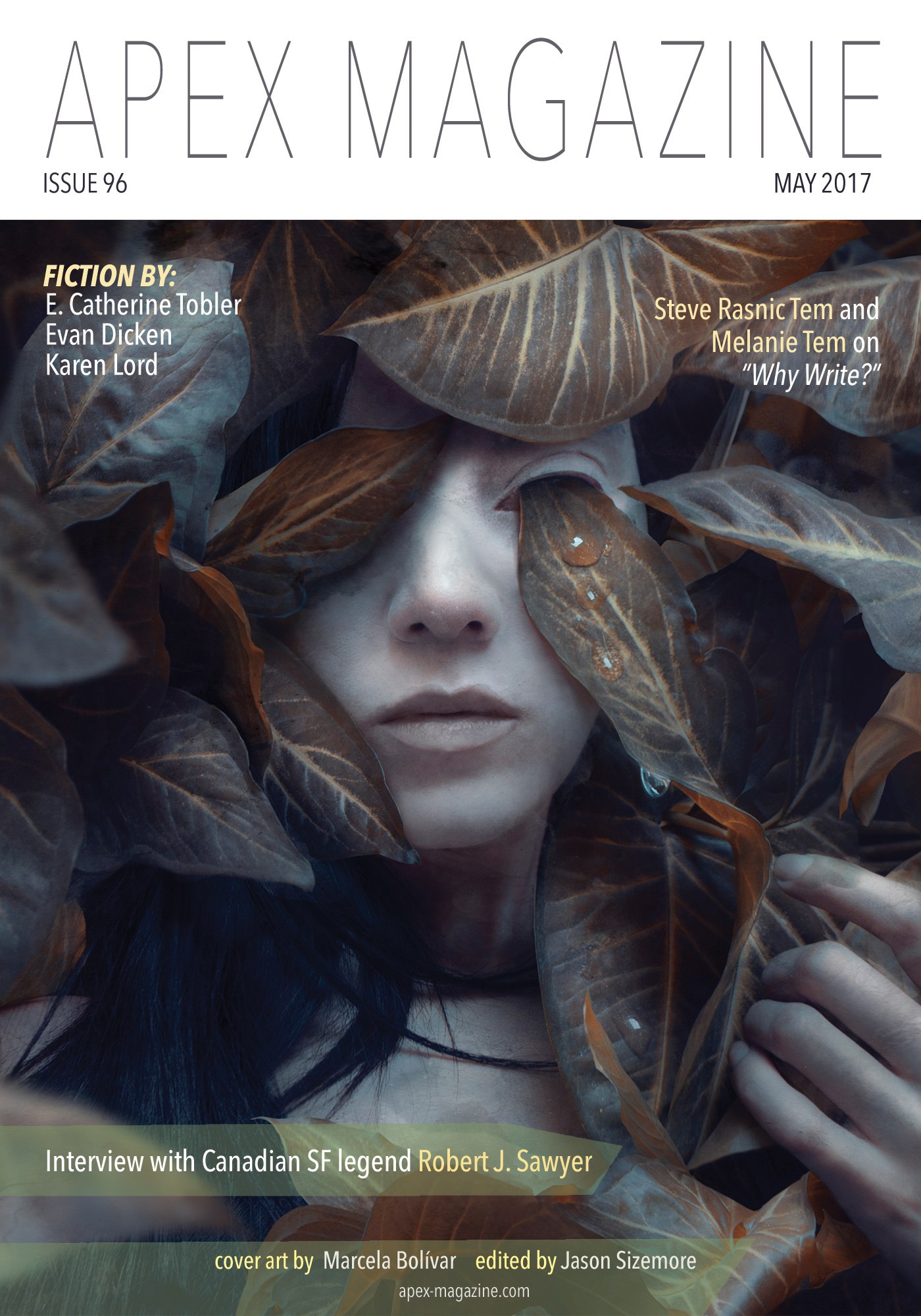
 You’ve all read Robert Sawyer (right?). The WWW series, the Hominids series, Flashforward, Mindscan, Frameshift, about a 20 other novels, and his newest novel is Quantum Night.
Sawyer won his first Prix Aurora award in 1991 and has been going strong ever since. His books are accessible and easy on the eyes. He writes the kind of near future scifi thrillers that are perfect for your friends who don’t want something too weird.
Head over the Apex Magazine website to read my interview with Robert Sawyer, where we mostly talk about Quantum Night, but also talk about getting characters (and readers!) excited about science, what baseball has to do with writing hard science fiction, what BattleStar Galactica has to do with psychology, and the reason why your surgeon might have pretty crappy bedside manner.
I am very proud of this interview. Mr. Sawyer and I spoke on the phone for about 40 minutes, and then I muppetflailed around the house for about a week. I took time out from the muppetflailing to transcribe the interview. If you enjoy reading the interview as much as I enjoyed conducting it, please leave a comment over at the Apex site, so they know you enjoyed it too.
Also? If you like Jeff Vandermeer, you should read “How Lovely Is The Silence of Growing Things”, also in this issue of Apex.
When a book has the kind of effect on you that McIntosh’s Defenders had on me, it’s time for a reread!
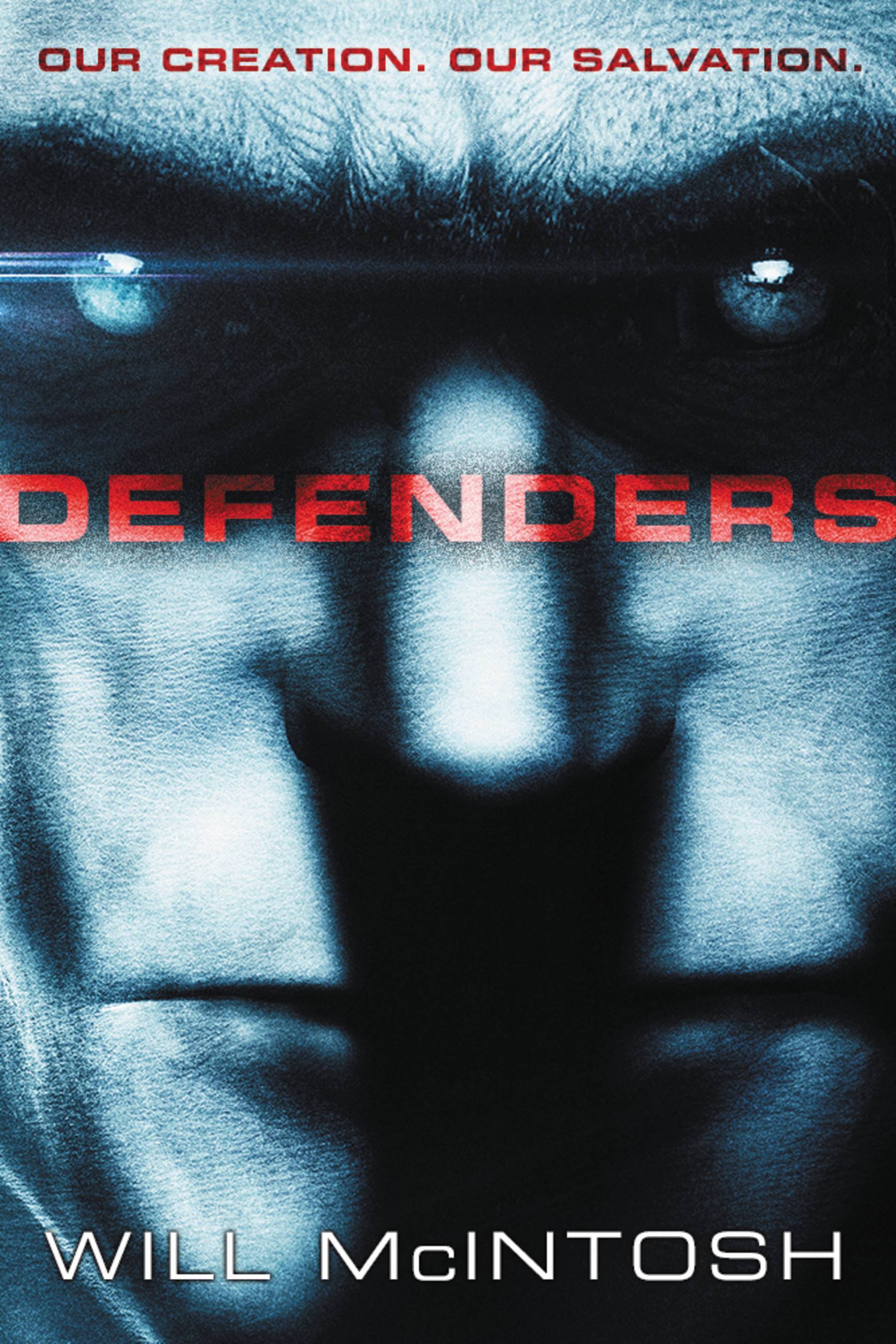 Defenders by Will McIntosh
published in 2014, read my original review here.
.
.
.
.
What I remember most about the first time reading this book is that it scared the living crap out of me. Not “omg, there’s a spider, someone kill it!” scared, not “why did a fire truck just pull into my apartment parking lot” scared, but the kind of scared that made me want to hide in the back of the bedroom closet, cover myself with a blanket, and be so silent that nothing would even know I existed.
When people ask me about books that had a strong emotional impact on me, this book gets a mention.
The first time I read Defenders, I read the last chunk of it in one sitting in the middle of the night because I was afraid that if I put the book down all the main characters would die before I could pick the book back up.
I’ve been itching to re-read Defenders for over a year. It’s so absorbing that it makes for an absolutely perfect escapist thriller. Near future, but so ridiculous that none of this stuff could ever happen. . . right? I mean, right?
Actually, the only thing in this book that I see as not happening in the next 50 years is us making contact with an alien species. That’s how the book opens: contact with an alien species that lands in remote areas on Earth. The Luyten are telepathic, and can easily read the minds of any human within 8 miles. When we come up with plans to attack them, they can easily pull those plans out of the mind of anyone involved and nearby, so a counter attack is easy. The Luyten didn’t come here to exterminate us, but they don’t want to die either. I’m reminded of something author Tade Thompson said when I interviewed him:
“LRR: If Earth does experience first contact with an alien species, how do you think humanity will react?
TT: If we encounter intelligent life, blind panic and religious hysteria.
If we encounter flora or fauna, blind panic and religious hysteria.
Humans don’t handle the unknown well. Look at our history.”
Interview with Author Lee Thompson
Posted on: March 25, 2017
- In: interviews | Lee Thompson
- 1 Comment
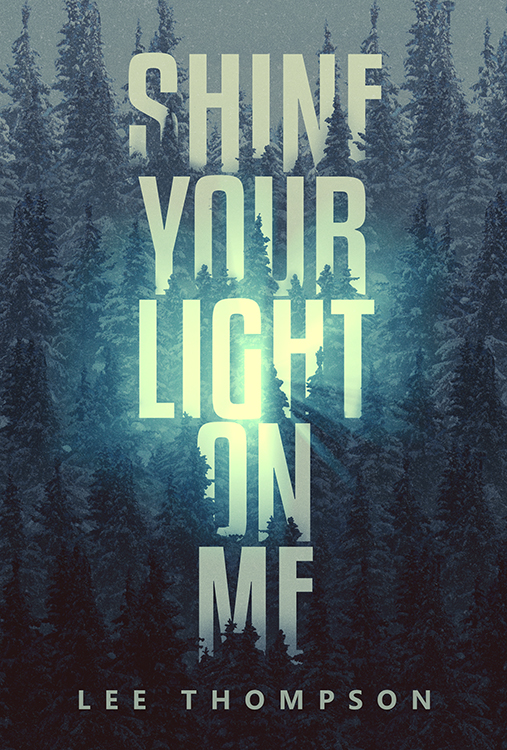
 Lee Thompson’s newest novella, Shine Your Light On Me, is now available through Apex Publications. Thompson writes thrillers, mysteries, and horror, often focusing on how to regain our humanity when we feel that all has been lost. His previous novels include A Beautiful Madness, It’s Only Death, With Fury in Hand, and When We Join Jesus in Hell. (Click here for info on purchasing Shine Your Light On Me)
.
In Shine Your Light on Me, Aiden faces a family tragedy only to months later be given the gift of healing. He doesn’t understand how his gift works, but his neighbors and acquaintances demand that he use it for them. When he could have the power to heal an entire town, does Aiden really have a choice? Desperate measures, indeed. Lee Thompson was kind enough to chat with me over e-mail about this thrilling new novella and other projects he has in the works. You can learn more about Lee at his website, Lee Thompson Fiction.
.
Let’s get to the interview!
Andrea: The plot of Shine Your Light On Me sounds absolutely fascinating. Miraculous healings, hopefulness that turns into dark desperation, and a teenager thrown into the middle of it all. Where did the idea for this story come from? Even more incredible is that this is a novella! How did you cram all of that into less than 200 pages?
Lee: Thanks for the interview, Andrea.
Well, Ken Wood from Shock Totem would tell you I was inspired by the cover for issue 4. And he’s partly right. Mostly it was asking myself, what things haven’t I written about that I want to now, right now? And I thought about it for weeks, finally realizing that to go from being a no one to everyone wanting a piece of you, would be terrifying to me. Especially if I was still a teenager. It’s kind of the opposite of Stephen King’s Carrie.
 the Little Red Reviewer
Recent Comments